
Shares of Mukesh Ambani-owned Reliance Industries Limited (RIL) rose nearly 1 per cent on Tuesday, hitting an intraday high of Rs 2,986.05 per share, after most brokerages reacted positively to the company's March quarter (Q4FY24) results. The bullish outlook stems from Reliance Jio's potential tariff hikes, given the competitive landscape, along with slow but steady improvement in the oil-to-chemical (O2C) vertical.

Foreign portfolio investors (FPI) have pulled out $3.5 billion from India's equity markets so far this month. The selling comes on the back of election-induced volatility and the rotation of flows from India to China, where stocks are available at half the valuations. If the selling pressure remains at the current level, this will be the highest FPI pullout since January 2023.

The other prominent gainers were Tech Mahindra, HCL Technologies, Wipro, State Bank of India and Larsen & Toubro. Bajaj Finserv, Power Grid, UltraTech Cement and HDFC Bank were among the laggards.

A cocktail of heatwave and upcoming cricketing events is expected to usher in the peak season for the country's largest beer maker, United Breweries. The beer maker, which has gained share in some key markets, will be a major beneficiary as April to July is an important period contributing to 40-45 per cent of its annual beer volumes. Going ahead, the T20 Cricket World Cup in June and the ongoing IPL will have a positive impact on volumes and should be able to offset the negative impact of elections on sales, experts believe.

Investors must adopt a balanced approach, incorporating both styles in their portfolios.

Among the Sensex firms, JSW Steel, Tata Steel, Tech Mahindra, Infosys, Wipro, Tata Consultancy Services, Nestle, HCL Technologies, HDFC Bank and Maruti were the major laggards. IndusInd Bank, ITC, Bharti Airtel and State Bank of India were among the winners.

The Indian aviation sector is on the cusp of a change as airlines look to induct a record number of aircraft. This, analysts said, will put the sector on a growth runway, though keeping it viable for only long-term investors. According to Vinit Bolinjkar, head of research at Ventura Securities, expectations of strong air traffic, coupled with low penetration, is the prime reason for a solid long-term outlook.

'While Indian markets are indeed not inexpensive, the valuations of largecap stocks are still a considerable distance from being overstretched.'

'The revenue projection arises out of all sectors doing well and the formalisation of the economy helps in making sure the tax domain gets widened.'

Shares of real estate firms have been outperforming over the past year. The rally, analysts say, may hit roadblocks in the near term amid stretched valuations, even as the long-term prospects for the sector remain ebullient. "Most of the positive news flow is already in the price. Hence, investors sitting on hefty profits may partially cash out at current levels," suggests V K Vijayakumar, chief investment strategist at Geojit Financial Services.

Strong macroeconomic headwinds causing turbulence in the $245-billion Indian IT industry are yet to calm down. Top Indian IT services companies are likely to post a decline or just marginal growth in sequential revenue in Q1FY24 because of a soft discretionary spending environment. Though the first quarter is seasonally strong for IT firms, "June 2023 will be an exception", according to analysts at Kotak Institutional Equities.

'We emphasise the importance of not basing investment decisions solely on electoral outcomes.' 'Instead, focusing on investing in high-quality businesses capable of prospering regardless of the political landscape is paramount.'

Hero MotoCorp, a major player in the two-wheeler market, has seen a 9 per cent rise in its stock since the beginning of the month. This increase, driven by the largest motorcycle company by volume, is attributed to expectations of a revival in rural sales due to normal monsoons, government measures to boost consumption, recent market share gains, and a large valuation discount compared to peers. In the near term, the company's volume performance and growth trajectory, particularly in rural markets and entry-level segments, are expected to be key drivers.
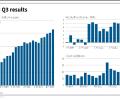
Since a week ago, better-than-expected results from Infosys Limited, Tata Consultancy Services Limited and HCL Technologies Limited sparked a 13 per cent rally in the sector subindex that grinded to a halt on Friday.

Despite multiple headwinds at the start of 2023, the Indian markets delivered a strong performance, posting 19-20 per cent growth for the year. Even as new records were set, investor sentiment remains strong going into 2024, given the lower inflation, expectations of steady to lower interest rates, higher economic growth, and strong inflows. However, the overriding concern for most brokerages is valuations.

India's corporate sector, including public sector enterprises (PSEs), continues to go slow on investments and capital expenditure (capex). According to data from Motilal Oswal Financial Services (MOFSL), corporate investments declined for the second consecutive quarter in the April-June period (first quarter, or Q1) of 2023-24 (FY24). After a contraction of 0.5 per cent year-on-year (Y-o-Y) in the 2022-23 (FY23) January-March quarter, corporate investments likely fell 6.2 per cent Y-o-Y in Q1FY24, write Nikhil Gupta and Tanisha Ladhaa of MOFSL in their recent report on corporate investments.

'This was earlier driven by industries and the commercial sector.'

Moody's Investors Service on Friday affirmed India's rating at the lowest investment grade of 'Baa3', with a stable outlook, saying high growth will support a gradual increase in income levels, but flagged risks of populist policies due to rise in political tensions. Moody's said although India's potential growth has come down in the past 7-10 years, the growth would outpace all other G20 economies through at least the next two years, driven by domestic demand. Moody's said the restoration of robust growth prospects post-pandemic, the effective commitment to inflation targeting and the rehabilitation of the financial system aided by reform supports its view of strengthening monetary and macro policy effectiveness.

FMCG major Britannia Industries' results for the January-March quarter (Q4) of the financial year 2023-24 (FY24) were received enthusiastically by the market with the share going up by 6.7 per cent on Monday to close at Rs 5,061.60 on the BSE. However, analysts said the results were in line with margins, and disappointing in terms of revenue growth. The consolidated net sales (excluding other operating income) rose 3 per cent year-on-year (Y-o-Y) to Rs 4,010 crore in Q4.

Amid rupee sliding below 64 to a dollar, global agency Standard & Poor's on Tuesday said it will maintain negative outlook for the country as currency depreciation is adversely impacting investor confidence.

Fitch Ratings on Thursday retained India's growth forecast for the current fiscal at 6.3 per cent citing economic resilience despite tighter monetary policy and exports weakness, but upped year-end inflation projection on El Nino threat. The Indian economy grew 7.8 per cent in the April-June quarter of current fiscal on strong services sector activity and robust demand. "The Indian economy continues to show resilience despite tighter monetary policy and weakness in exports, with growth outpacing other countries in the region," Fitch said, while projecting 6.3 per cent growth for current fiscal (April-March), and 6.5 per cent for next fiscal.

As many as 31 mainboard IPOs raised a cumulative Rs 26,272 crore in this period, according to Prime Database. During the April-September 2007 bull run, 48 IPOs totalling Rs 21,243 crore were launched. The number of deals in H1FY24 was 2.2 times that of the same period of the last fiscal year, but the amount raised was 26 per cent lower.

Foreign investors made a significant turnaround and injected over Rs 1,500 crore into Indian equities in February, reversing the massive outflows seen in the preceding month, primarily due to robust corporate earnings and positive economic growth. Additionally, Foreign Portfolio Investors (FPIs) continued to be bullish on the debt markets as they put in over Rs 22,419 crore during the month under review, data with the depositories showed. Looking ahead to March, the outlook for FPI flow appears promising, provided the current economic trajectory and corporate performance sustain their positive momentum, potentially continuing to attract foreign investment into Indian equities, Mayank Mehraa, smallcase manager and principal partner at Craving Alpha, said.

Reserve Bank of India (RBI) is unlikely to cut the benchmark interest rate at its upcoming monetary policy review meeting, taking place soon after the announcement of the Lok Sabha election results, amid inflation challenges, said experts. The Monetary Policy Committee (MPC) may also refrain from rate cut as economic growth is picking up, notwithstanding the elevated interest rate of 6.5 per cent (repo) prevailing since February 2023. The meeting of the Reserve Bank Governor Shaktikanta Das headed MPC is scheduled for June 5 to 7.

New businesses have been secured from the public and private sectors, as well as domestic and international markets.

'As China's reopening euphoria fizzled out on the back of some disappointing economic data, we saw inflows coming back to India with full force in the past 3-4 months.'
Corporate India is starting to step up its capital expenditure plans amid government incentives and signs of rising demand, company executives and analysts have indicated. This coincides with the Reserve Bank of India (RBI) recently citing a double-digit growth in private capital expenditure. Healthy balance sheets of banks and corporates, along with increasing capacity utilisation and improving business sentiment, are contributing to a favourable environment for sustained growth in private sector investments, the RBI said in its policy last week.

The headline seasonally adjusted Nikkei India Composite PMI Output Index, that maps both the manufacturing and services sectors, rose from 53.3 in June to 54.1 in July.

'We see the defence industry as one of the leading sectors, which will significantly contribute to the growth of the Indian economy, but more importantly, bring atmanirbharta to national security.'

The net leasing of Grade-A commercial office space in India will stagnate this financial year at 32-34 million square feet, with global uncertainties brewing caution among key tenant categories, according to the latest Crisil Ratings report. Major seven cities in India - Bengaluru, Chennai, Hyderabad, Kolkata, Mumbai Metropolitan Region (MMR), National Capital Region (NCR) and Pune - had Grade-A office space with an operational stock of around 705 million square feet as of March 2023. India's commercial office space is dominated by technology companies, with information technology (IT) and IT-enabled services (ITeS) companies occupying 42-45 per cent of the operational stock.

The rapid decline in fiscal health and deterioration in the external sector outlook has prompted the Reserve Bank of India (RBI) to ask the government to hasten domestic reforms to curb its subsidy bill and encourage renewed equity flows.

The headline for corporate profit growth has been very encouraging in the July-September quarter (Q2) of 2023-24 (FY24), with the combined net profit of listed companies up by 38 per cent year-on-year. However, the earnings distribution has been very lopsided, with most of the growth coming from public-sector oil-marketing companies (OMCs), banks, non-bank lenders, automobile (auto) companies, and cement producers. By comparison, companies from information technology services, fast-moving consumer goods (FMCG), retail, and consumer durables were disappointed, experiencing a sharp slowdown in net sales growth and a relatively muted increase in reported net profit.

'We like certain stocks from banking, insurance, retail, hospitals and capital goods.' 'Though some of these stocks may seem expensive, they will compound well over the long term, thus justifying their current multiples.'

Overall, the credit profiles of players will be supported by healthy balance sheets and liquidity. Prudence in capital and development expenditure, efficient working-capital management, and recent equity raising will help sustain credit metrics in FY22.

Announcing the bi-monthly monetary policy, Reserve Bank of India Governor Shaktikanta Das said the RBI's internal survey says manufacturing, services and infrastructure sector firms are optimistic of the business outlook.

The improving outlook for the power sector has caught the interest of dividend yield funds. In the first four months of the current financial year (2023-24, or FY24), five of the six largest dividend yield funds have shown a notable increase in their exposure to stocks within the power sector. Some have even introduced new stocks to their portfolios.

The IHS Markit India Manufacturing PMI rose from 51.2 in November to 52.7 in December. Factories benefited from a rebound in demand, and responded by scaling up production to the greatest extent since May. As per the survey, new work orders witnessed marked improvement, with the pace of expansion picking up to the fastest since July.

While analysts remains overweight on financials, property, discretionary, industrials and materials, they maintain a neutral stance on pharma, telecom and energy; and underweight on staples, utilities, and IT services.

Domestic automobile retail sales rose 10 per cent in June driven by sales growth across various segments, including passenger vehicles and two-wheelers, automobile dealers body FADA said on Thursday. Total retail sales last month rose to 18,63,868 units from 17,01,105 units in the year-ago period. Passenger vehicle retail sales increased 5 per cent to 2,95,299 units as against 2,81,811 units in June 2022.
